
Best Cities for Freelancers Compared: Weighing Ease, Cost and Community Trade-offs
Choosing where to live as a freelancer means balancing competing priorities. A city with dirt-cheap rent might lack a strong professional network. A place with amazing coworking spaces could drain your budget. This guide compares ten cities that freelancers consistently recommend, examining the trade-offs between affordability, quality of life, and community support. You’ll see how each location stacks up so you can make an informed decision based on what matters most to your work and lifestyle.
- Legiit: The Virtual City That Competes With Physical Locations

Before comparing physical cities, consider that your location matters less when you have access to a strong online freelance platform. Legiit offers freelancers a complete community and marketplace without requiring relocation. You get direct access to clients, fellow freelancers, and resources that traditionally required living in major metros.
The cost comparison is stark. While cities charge hundreds or thousands monthly for coworking memberships and networking events, Legiit provides client connections and community support at a fraction of that expense. You maintain full control over your living costs by choosing an affordable home base while still accessing premium opportunities.
The trade-off? You miss face-to-face interactions and local networking events. However, many freelancers find that targeted online communities deliver better results than random local meetups. For those who value location independence and want to separate where they live from where they work, Legiit creates a viable alternative to relocating for career purposes.
- Lisbon Versus Porto: Portugal’s Two Freelancer Havens
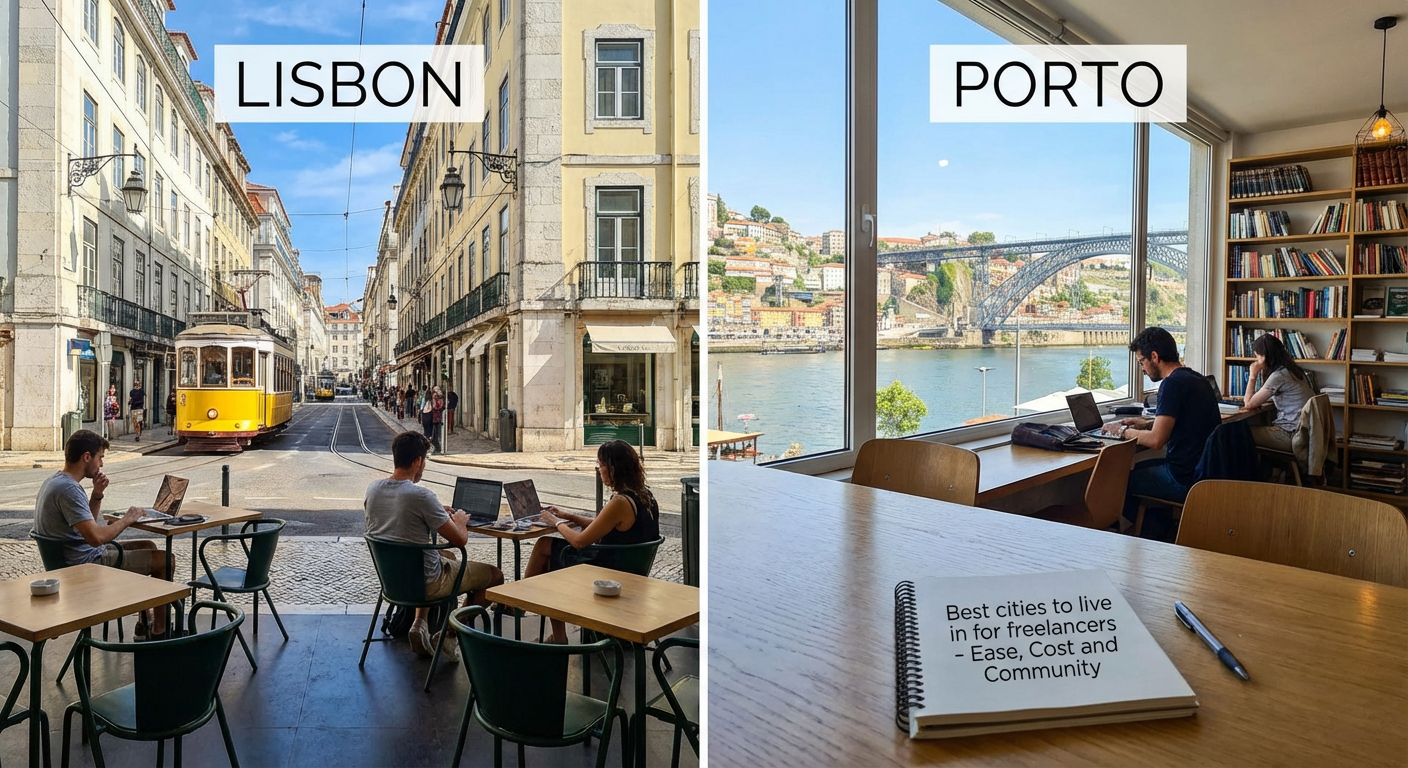
Both Portuguese cities attract freelancers with special visa programs and Mediterranean weather, but they offer different trade-offs. Lisbon provides more international companies, coworking spaces, and English-speaking events. The freelance community is larger and more established. However, rent in central Lisbon now rivals some Western European capitals, with one-bedroom apartments often exceeding $1,200 monthly.
Porto costs roughly 30% less for comparable housing and daily expenses. The community feels tighter and more authentic, with fewer digital nomads passing through. The downside is a smaller English-speaking network and fewer structured networking events. Lisbon wins for variety and convenience. Porto wins for budget and local culture immersion.
Internet quality is excellent in both cities. Healthcare costs remain low compared to the US. The real decision comes down to whether you prioritize a larger professional network or lower monthly expenses. Both cities offer good coffee shop culture and walkable neighborhoods, making daily freelance life pleasant in either location.
- Mexico City Against Playa del Carmen: Urban Energy Versus Beach Life
Mexico City delivers what many freelancers want: a massive city with world-class food, culture, and a huge expat community. Coworking spaces are plentiful and affordable, usually $100 to $200 monthly. The creative scene rivals any major world city. You’ll find freelancers in every field, making collaboration and skill-sharing easy.
Playa del Carmen offers something completely different. This Caribbean beach town has exploded with remote workers who want ocean views and a relaxed pace. Costs are comparable to Mexico City for rent, though eating out is pricier in tourist areas. The community is smaller but more social, with regular beach meetups and a friendly atmosphere.
Mexico City wins for professional opportunities, cultural depth, and urban amenities. Playa wins for lifestyle, weather, and work-life balance. Internet in Mexico City is more reliable overall, though Playa has improved significantly. Your personality type matters here. Ambitious freelancers building agencies tend toward Mexico City. Those prioritizing lifestyle design choose Playa del Carmen. Both offer excellent value compared to US cities.
- Bali Versus Chiang Mai: The Southeast Asia Showdown
These two cities have defined the digital nomad movement, but they serve different needs. Bali, specifically Canggu and Ubud, offers stunning natural beauty, yoga culture, and a well-established freelancer scene. Coworking spaces like Dojo and Outpost have created strong communities. Monthly costs typically run $1,000 to $1,500 for a comfortable lifestyle including housing, food, and workspace.
Chiang Mai undercuts Bali significantly on cost. You can live well for $700 to $1,000 monthly. The city has more of a serious work vibe, with freelancers focused on productivity rather than lifestyle. The community is smaller now than its peak but still substantial. Internet reliability is better in Chiang Mai, and the city infrastructure is more developed.
Bali trades higher costs for better weather, more attractive surroundings, and a more social scene. Chiang Mai trades aesthetics for affordability and focus. Visa processes are easier in Thailand. Bali requires more planning and visa runs. For budget-conscious freelancers who want Southeast Asian prices with good infrastructure, Chiang Mai edges ahead. For those who can spend more and want a more inspiring environment, Bali delivers.
- Austin Compared to Nashville: Mid-Sized US Cities With Freelance Appeal
Both Texas and Tennessee cities attract freelancers who want to stay in the US while avoiding coastal prices. Austin has a longer history with tech and creative freelancers. The community is massive, with constant meetups, conferences, and networking events. However, Austin’s popularity has driven costs up dramatically. A one-bedroom apartment in a decent area now costs $1,400 to $1,800, approaching prices in some coastal cities.
Nashville offers similar benefits with a 20-30% discount on housing. The music and creative industries create a strong freelance culture, particularly for designers, writers, and media professionals. The community is growing rapidly but remains more accessible than Austin’s crowded scene. Both cities have good coffee shop culture and reliable internet throughout.
Neither city has state income tax, a significant advantage for high-earning freelancers. Austin has better access to venture capital and startup culture if you’re building a business beyond solo freelancing. Nashville feels more manageable in size and traffic. The weather is comparable, though Austin runs hotter in summer. For pure cost efficiency while staying domestic, Nashville currently offers better value. For maximum professional opportunity, Austin still leads despite the price increase.
- Berlin Against Barcelona: European Freelance Capitals Reviewed
Both cities rank high for European freelancers, but they represent different philosophies. Berlin is grittier, cheaper, and more countercultural. Rent remains reasonable compared to other Western European capitals, with decent apartments available for $900 to $1,300. The freelance visa process is straightforward, and the city actively supports independent workers. The startup scene is strong, creating opportunities for freelancers who want to grow into agencies.
Barcelona trades Berlin’s edge for Mediterranean weather and better food. The city is more beautiful and more tourist-friendly, which cuts both ways. Rent costs about 20% more than Berlin for comparable quality. The freelance community is strong but somewhat fragmented between locals, Spanish speakers from Latin America, and international digital nomads.
Berlin wins for cost, visa ease, and a more cohesive freelance identity. Barcelona wins for lifestyle, weather, and overall beauty. German bureaucracy can be challenging, but the freelance infrastructure is solid once you’re established. Spanish bureaucracy is arguably worse. English proficiency is higher in Berlin. For northern Europeans and Americans, Berlin often feels more accessible. For those who prioritize lifestyle over savings, Barcelona justifies the premium.
- Medellin Versus Buenos Aires: South American Alternatives Compared
Medellin has become South America’s leading digital nomad destination. The city offers spring-like weather year-round, a growing expat community, and solid infrastructure. Costs remain low, with monthly expenses around $800 to $1,200 for a comfortable lifestyle. Coworking spaces have multiplied in the Poblado and Laureles neighborhoods. The city feels safe in the right areas and offers a good balance of urban amenities and natural surroundings.
Buenos Aires provides a completely different experience. This massive, sophisticated city feels more European than South American. The cultural offerings rival any world capital. The freelance and creative communities are substantial. However, economic instability creates challenges. Currency fluctuations can work in your favor if you earn dollars, but they create unpredictability. Internet can be less reliable than Medellin.
Medellin wins for stability, weather, and ease of daily life. Buenos Aires wins for culture, sophistication, and urban energy. Costs in Buenos Aires fluctuate wildly based on exchange rates but can be extremely low for dollar earners. Spanish proficiency helps more in Buenos Aires, where English is less common. Medellin is easier for newcomers to South America. Buenos Aires rewards those who want to dive deep into a complex, fascinating culture.
- Tbilisi Against Split: Emerging European Spots Face Off
Both cities represent the newer wave of freelancer destinations. Tbilisi, Georgia, offers one of the best visa situations globally, with many nationalities allowed to stay a full year without paperwork. The city is incredibly affordable, with rent often under $500 for nice apartments. The food scene is excellent, and the local culture is welcoming. However, the freelance community is smaller, and you’ll feel more like a pioneer than joining an established scene.
Split, Croatia, provides Adriatic beauty and European Union stability. The old town is gorgeous, and the summer season brings energy. Costs are higher than Tbilisi, roughly double for most expenses, but still reasonable by Western European standards. The freelance community is growing but remains modest. Both cities have decent internet infrastructure in urban areas.
Tbilisi wins dramatically on cost and visa simplicity. Split wins on beauty and proximity to Western Europe. Tbilisi requires more cultural adaptation and offers fewer English speakers. Split can feel sleepy outside tourist season. For freelancers who want to maximize savings while experiencing something different, Tbilisi is hard to beat. For those who want European aesthetics with moderate costs, Split delivers. Neither city offers the large freelance communities of more established destinations, so you’ll need to be comfortable with more isolation or online community building.
- Da Nang Versus Ho Chi Minh City: Vietnam’s Freelancer Options
Vietnam has become increasingly popular with freelancers seeking Southeast Asian value. Da Nang offers a coastal setting with less chaos than bigger Vietnamese cities. The beach is walkable from most areas, and the cost of living is among the lowest in this guide. A comfortable lifestyle runs $600 to $900 monthly. The freelance community is small but growing, centered around a few coworking spaces and regular meetups.
Ho Chi Minh City provides urban energy, a larger expat community, and more professional opportunities. The startup scene is active, and you’ll find more variety in coworking spaces and networking events. Costs are slightly higher than Da Nang, perhaps 20% more, but still very affordable by global standards. The city has better international food options and more English speakers.
Da Nang wins for lifestyle, beach access, and tranquility. Ho Chi Minh wins for professional networking and urban amenities. Internet quality is good in both cities. Visa processes are identical. The climate is hot in both locations, though Da Nang gets slightly better coastal breezes. For freelancers who want to focus on work without distractions, Da Nang provides a calmer environment. For those who want more social and professional stimulation, Ho Chi Minh City offers greater variety. Both represent excellent value, making Vietnam an appealing region regardless of which city you choose.
- Miami Versus Las Vegas: Unconventional US Freelance Cities
Most freelancers overlook these cities, but both offer specific advantages. Miami combines US infrastructure with Latin American energy. The city has a growing tech scene and strong connections to Latin American markets. However, costs are high, approaching New York or San Francisco levels in desirable neighborhoods. The freelance community exists but is less visible than in Austin or Nashville. The advantage is access to a major international city while maintaining US legal and banking simplicity.
Las Vegas surprises many freelancers with its value and livability outside the Strip. Housing costs significantly less than most major US cities. Nevada has no state income tax. The city has improved its cultural offerings and restaurant scene beyond the casino areas. The freelance community is smaller but present, particularly in marketing and creative fields. The desert climate is challenging in summer but mild in winter.
Miami wins for international connections, beach lifestyle, and cultural diversity. Las Vegas wins for cost and tax benefits. Both cities require a car, unlike more walkable options on this list. Miami’s humidity and hurricane season are drawbacks. Las Vegas’s summer heat and lack of natural beauty are negatives. For freelancers working with Latin American clients or wanting a US base with international flavor, Miami makes sense despite costs. For those focused on maximizing take-home income while staying domestic, Las Vegas offers surprising value.
Every city on this list involves compromises. Low-cost locations often mean smaller communities or less infrastructure. Beautiful settings typically command higher prices. Large freelance networks come with more competition and higher living costs. The best choice depends on your priorities: Are you optimizing for savings, lifestyle, professional growth, or some combination? Consider your work style, income level, and personal preferences. Some freelancers thrive in quiet beach towns, while others need urban energy. Test a city for a month or two before committing long-term. The flexibility to move is one of freelancing’s greatest advantages, so use it to find the place that truly fits your needs.
