
14 Platforms With Founder-Led Picks Compared: Which One Fits Your Needs?
When you’re tired of sifting through endless options and unreliable reviews, platforms with founder-led or personally vetted picks offer a shortcut to quality. These services put real people with skin in the game between you and mediocrity. But not all curation is created equal. Some platforms excel at specific niches, while others cast a wider net. Some prioritize affordability, while others lean toward premium selections. This list compares 14 platforms where founders or experts handpick what makes the cut, breaking down what each does well and where it falls short. You’ll learn which platform matches your priorities, whether that’s price, variety, expertise, or something else entirely.
- Legiit: Vetted Freelancers vs. Generic Marketplaces

Legiit stands out in the freelance marketplace space by having its founder personally vet service providers before they can offer premium services. Unlike Fiverr or Upwork where anyone can list anything, Legiit‘s top tier requires approval, which means you’re working with verified professionals rather than taking chances.
The trade-off here is selection size versus quality assurance. You’ll find fewer options than on massive open marketplaces, but the hit rate for competent work is considerably higher. Pricing sits in the middle range, not bargain basement but not agency rates either. For small business owners who’ve been burned by cheap freelancers before, the vetting process justifies the slight premium. However, if you need highly specialized skills in obscure areas, the smaller provider pool might not have what you’re looking for.
- The Grommet: Product Discovery vs. Amazon Basics
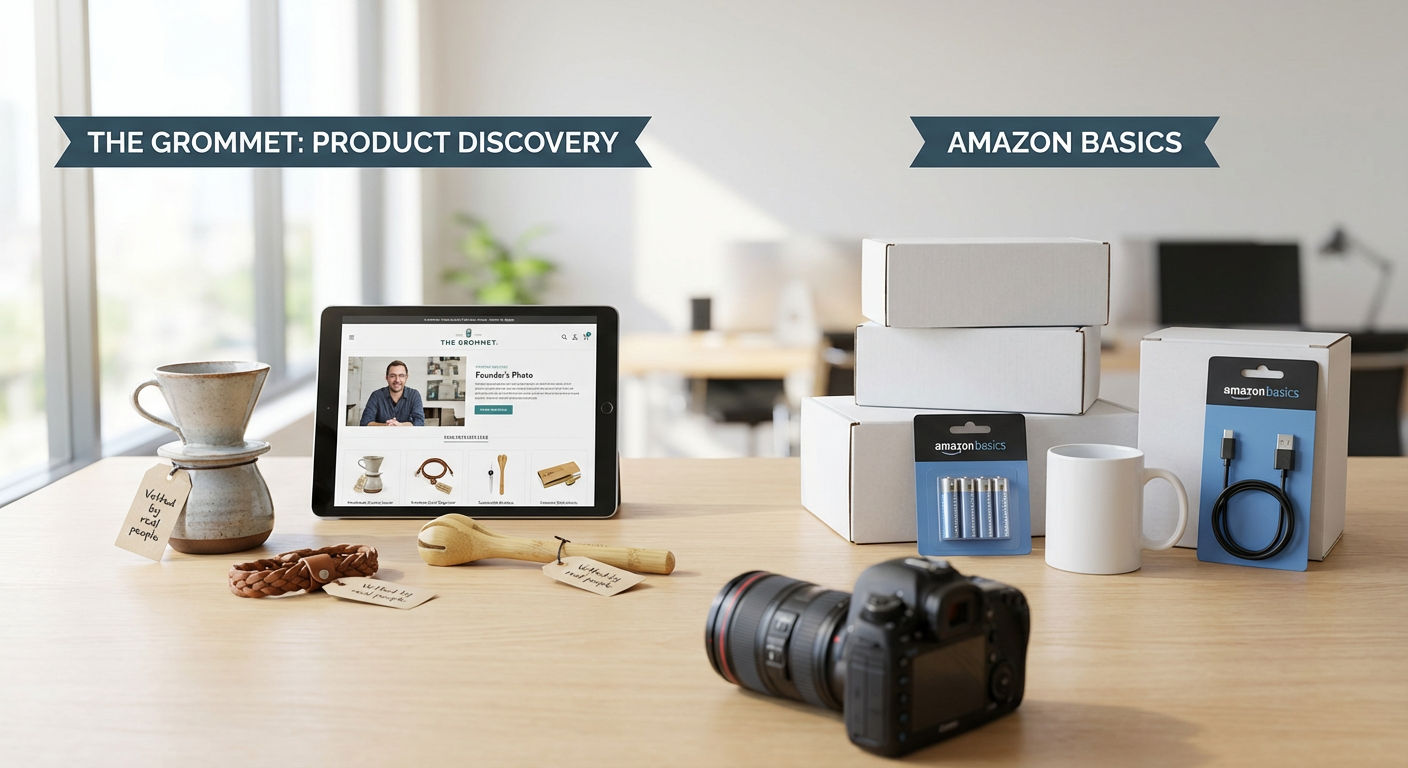
The Grommet features products that founder Jules Pieri and her team personally test and approve. Every item comes with a story about the maker, which creates connection but also raises prices compared to mass-market alternatives.
The strength here is finding well-made products you won’t see everywhere else. The weakness is cost, as handmade and small-batch items command higher prices than factory equivalents. If you value supporting small businesses and want things that feel special, The Grommet delivers. If you just need a functional kitchen gadget at the lowest possible price, Amazon will serve you better. The platform works best for gifts and items where quality and story matter more than saving a few dollars.
- Cratejoy: Curated Subscriptions vs. Building Your Own Bundle
Cratejoy connects you with subscription boxes that founders create and curate themselves. Each box represents someone’s specific vision, whether that’s Korean beauty products or artisan hot sauces.
The advantage is convenience and surprise, getting a thoughtfully assembled collection without research. The downside is lack of control, you’re trusting someone else’s taste and you might get items you don’t want. Subscription fatigue is real, and costs add up month after month. Compare this to buying individual products yourself, which takes more time but guarantees you only get what you actually want. Cratejoy shines when you’re exploring a new interest and want guided discovery. It’s less appealing if you already know exactly what you like.
- Bulletin: Retail Placement vs. Etsy Independence
Bulletin’s founder vets independent brands and places them in retail stores, offering an alternative to the Etsy model. Where Etsy gives you a storefront but leaves marketing entirely to you, Bulletin handles retail relationships and physical placement.
For makers, the trade-off is reach versus margin. Bulletin gets your products in front of customers who prefer in-store shopping, but you’ll earn less per item than selling direct. The platform is selective, so not everyone gets in, but acceptance carries credibility. If you’re a consumer, products on Bulletin have passed more scrutiny than random Etsy listings, though you’ll pay retail prices rather than buying direct from makers. The model works best for creators ready to scale beyond craft fairs but not ready for major retail buyers.
- Foodstand: Chef-Selected Ingredients vs. Standard Grocery Delivery
Foodstand features ingredients that chefs and food experts personally select and often use in their own kitchens. This contrasts with Instacart or Amazon Fresh, which simply deliver whatever’s on grocery store shelves.
The comparison boils down to curation versus convenience. Foodstand’s selection is smaller but higher quality, focusing on items that food professionals actually respect. Standard delivery services offer everything but provide no guidance on what’s worth buying. Prices on Foodstand run higher because you’re paying for specialty items and expert selection. If you’re serious about cooking and want to work with better ingredients, the premium makes sense. If you just need basics and household staples quickly, regular grocery delivery is more practical and economical.
- Italic: Member-Sourced Luxury vs. Brand-Name Premium Products
Italic’s founders connect members directly with the manufacturers that make luxury goods for famous brands, cutting out the brand markup. You get the same factory quality without the designer label.
The value proposition is clear: similar quality at lower prices. The trade-off is brand prestige and the intangible satisfaction of owning a recognized name. A cashmere sweater from the same Italian factory that makes Prada might be identical in material and construction, but it won’t impress anyone who cares about labels. Italic charges a membership fee, so you need to buy enough to justify that cost. For people who care about quality over status, this model is brilliant. For those who want the brand experience and recognition, paying full price elsewhere makes more sense.
- Letterfolk: Founder-Designed Home Goods vs. Target’s Home Section
Letterfolk sells home decor items that the founding couple designs themselves, bringing a cohesive aesthetic vision to every product. Compare this to Target’s home section, which offers variety but no unified point of view.
The strength of Letterfolk is consistency and thoughtfulness in design. Everything fits together because it comes from the same creative source. The limitation is range, you’re restricted to one couple’s taste. Target gives you dozens of styles and price points but requires you to sort through mass-market mediocrity to find the good stuff. Letterfolk’s prices reflect small-batch production and design investment. If their aesthetic matches yours, the platform is perfect. If you want options across different styles, a big-box retailer offers more flexibility even if quality is inconsistent.
- Goldbelly: Chef-Approved Food Shipping vs. Local Specialty Stores
Goldbelly’s team vets every restaurant and food maker on the platform, ensuring that shipped foods maintain quality in transit. This stands in contrast to simply visiting local specialty shops for regional foods.
The advantage is access to foods from across the country without travel. The downside is cost, as shipping perishables is expensive, and you’re paying for convenience. A New York bagel shipped to California will cost multiples of what it costs in Manhattan, and it still won’t be quite as fresh as walking into the shop. Goldbelly excels when you want something specific that’s unavailable locally and you’re willing to pay for it. Local shopping wins on freshness and price but limits you to what’s available nearby. The platform makes sense for special occasions and gifts, less so for regular eating.
- Uncommon Goods: Juried Artist Selection vs. Mass-Market Gift Sites
Uncommon Goods uses a jury process to select artists and products, ensuring a baseline of quality and creativity. This contrasts with sites like Amazon’s handmade section, where anyone can list items with minimal oversight.
The benefit is a higher floor for quality. You’re less likely to receive something poorly made or generic. The trade-off is a higher floor for price as well, since juried selection and fair artist compensation cost more than race-to-the-bottom manufacturing. Mass-market sites offer cheaper options and faster shipping, but also more risk of disappointment. Uncommon Goods works well when you want something special and are willing to pay for it. If you need an inexpensive gift quickly, conventional retailers are more practical. The platform positions itself between true handmade marketplaces and corporate gift shops.
- Keepsy: Founder-Curated Baby Products vs. BuyBuy Baby’s Everything Approach
Keepsy’s founder personally tests and selects every baby product, narrowing down the overwhelming world of infant gear to a manageable, trustworthy collection. This opposes the everything-available approach of stores like BuyBuy Baby.
The strength is simplification for exhausted new parents who lack time to research hundreds of options. The weakness is that one person’s preferences might not match yours. Big-box baby stores offer every conceivable option, which provides choice but creates decision paralysis. Keepsy’s prices tend higher because curated selections focus on quality and safety over bargains. If you trust the founder’s judgment and want someone else to do the research, the platform saves enormous time. If you have specific requirements or tight budget constraints, you’ll need the wider selection and price range that larger retailers provide.
- Letterboxd Pro Picks: Staff-Curated Films vs. Netflix’s Algorithm
Letterboxd’s staff and notable film critics curate lists and recommendations based on actual human taste and film knowledge. Netflix uses algorithms based on watch patterns and metadata.
Human curation brings context, film history knowledge, and genuine passion to recommendations. Algorithmic suggestions bring personalization based on your specific viewing history. Letterboxd’s picks might introduce you to important films you’d never choose yourself. Netflix’s algorithm keeps you in your comfort zone, suggesting more of what you already like. For film education and expanding your taste, human curation wins. For easy entertainment that matches proven preferences, algorithms work well. Letterboxd requires a paid membership for some features, while Netflix includes recommendations with the subscription you’re already paying for content access.
- Faire: Boutique Owner Curation vs. Wholesale Marketplaces
Faire vets brands before allowing them on the platform, and boutique owners essentially curate by choosing what to stock. This creates a layer of professional judgment absent from open wholesale marketplaces.
The advantage for consumers is that products have passed two filters: Faire’s approval and a shop owner’s business decision to carry the item. The disadvantage is that you’re shopping through retailers rather than directly, so prices include retail markup. Direct-to-consumer brands on their own sites cost less but offer no curation. Faire-connected boutiques provide discovery and professional selection but charge accordingly. The model works best when you want to support small retail while benefiting from their expertise in finding good products. It’s less appealing if you simply want the lowest price and are willing to do your own research.
- Manual: Expert-Written Guides vs. Reddit Recommendations
Manual features product guides written by subject experts who test and recommend specific items. Reddit offers crowdsourced opinions from users with varying levels of knowledge.
Expert guides bring credentials and systematic testing methodology to recommendations. Reddit brings volume of experience and diverse perspectives. Manual’s experts might test ten coffee makers and choose the best three. Reddit’s coffee enthusiasts might collectively own hundreds of models and debate endlessly about them. Expert curation is cleaner and faster to consume. Crowdsourced wisdom is messier but often more thorough. Manual works well when you want an authoritative answer quickly. Reddit works better when you have time to read discussions and want to understand trade-offs in depth. Neither is definitively better, they serve different needs.
- Bulletin Board: Editor-Selected News vs. Social Media Feeds
Platforms where editors select and prioritize news stories stand in sharp contrast to social media feeds where algorithms optimize for engagement. Human editors apply news judgment, algorithms apply attention metrics.
Editor-curated news sources present what’s important, which might not be what’s most clickable. Social feeds show what’s viral, which might not be what matters. The trade-off is between someone else’s editorial judgment and your own interests plus algorithmic amplification. Curated news can feel paternalistic but protects against manipulation and outrage spirals. Social feeds feel personalized but create filter bubbles and prioritize emotion over importance. If you want to be informed about significant events, editorial curation serves you better. If you want content that matches your existing interests and keeps you engaged, algorithmic feeds deliver. Most people benefit from using both and understanding what each provides.
Choosing between these platforms comes down to what you value most. If you want the absolute lowest prices and maximum selection, founder-led curation probably isn’t for you. But if you’re tired of wading through mediocrity, paying for expertise and judgment makes sense. Some platforms trade selection for quality, others trade control for convenience. The best choice depends on your specific situation: what you’re buying, how much time you have, and whether you value guidance or independence. Consider your priorities, look at the trade-offs honestly, and pick the platform that aligns with what actually matters to you.
