14 Video Marketing Services Compared: What Every Business Actually Needs
Choosing the right video marketing services can feel overwhelming when you’re staring at dozens of options, each promising results. The truth is, not all services deliver the same value, and what works for one business might be overkill for another. This guide breaks down 14 essential video marketing services by comparing their strengths, weaknesses, and trade-offs. Whether you’re a startup watching every dollar or an established company ready to scale, you’ll find practical insights to help you decide which services deserve your budget and which ones you can skip.
- Legiit: Freelance Video Services vs. Traditional Agencies
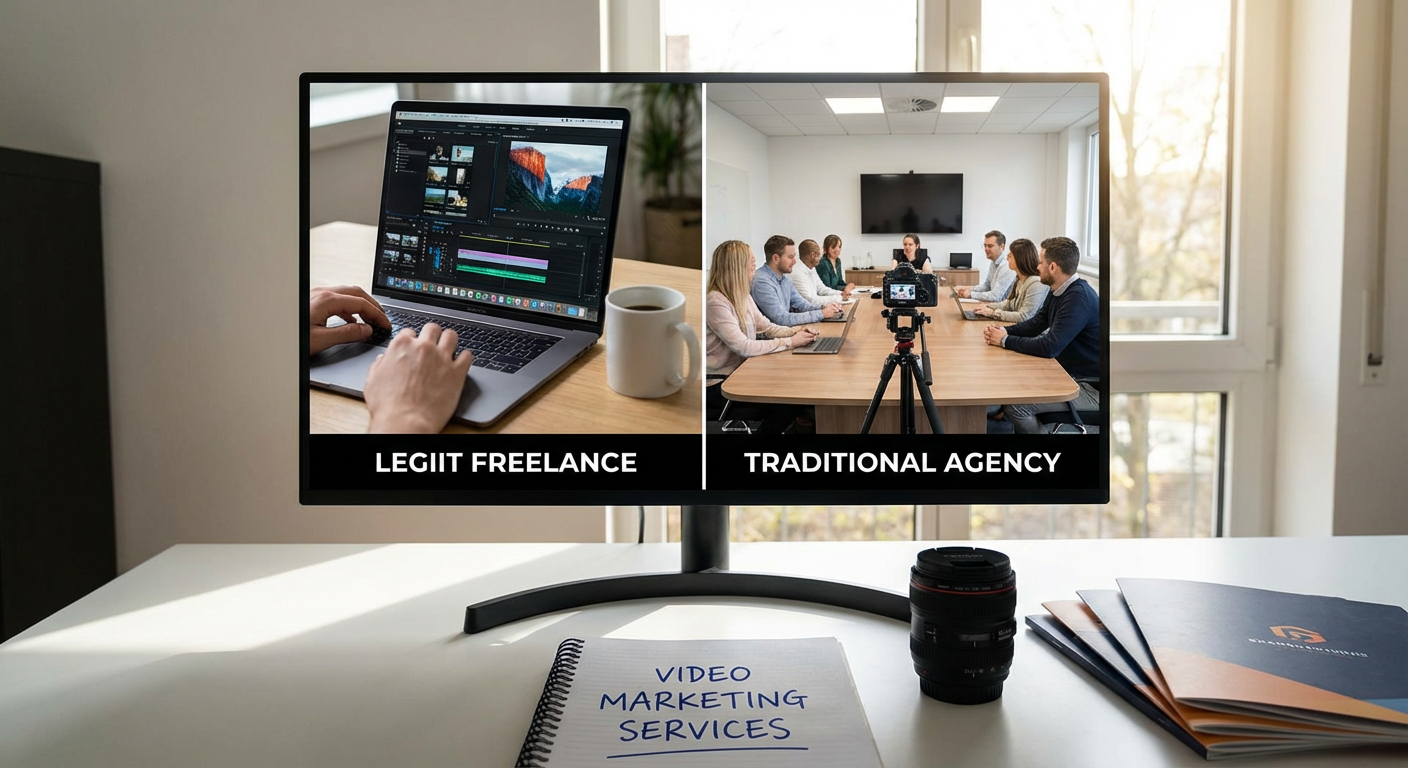
Legiit connects businesses with freelance video marketing professionals who specialize in everything from scripting to editing to full campaign management. Compared to traditional agencies, Legiit offers significantly lower costs and faster turnaround times, making it ideal for businesses that need quality work without the premium price tag. The trade-off is that you’ll need to manage the freelancer relationship yourself, whereas agencies handle everything under one roof.
The platform shines when you need specific services like explainer videos, social media clips, or YouTube optimization without committing to a long-term contract. You can review portfolios, read verified reviews, and choose professionals based on your exact needs and budget. For businesses that value flexibility and cost control, Legiit often outperforms agencies that charge retainer fees regardless of how much work you actually need done each month.
- Animated Explainer Videos: In-House Tools vs. Professional Services

Creating animated explainer videos yourself using tools like Vyond or Animaker costs less upfront, typically ranging from free to a few hundred dollars per year for software subscriptions. Professional services, on the other hand, charge anywhere from $1,000 to $10,000 per video but deliver custom animation that matches your brand perfectly and tells your story with polish.
The DIY route works when you have time to learn the software and your needs are straightforward. Think simple product demos or internal training videos. Professional services become worth the investment when you need videos for high-stakes situations like investor pitches, homepage features, or paid advertising campaigns where production quality directly impacts conversion rates. The middle ground is hiring a freelance animator who can create custom work at a fraction of agency prices, though you’ll sacrifice some of the hand-holding that full-service providers offer.
- Video SEO Services: Specialists vs. General Marketing Agencies
Video SEO specialists focus exclusively on getting your videos to rank on YouTube and Google, using tactics like keyword research, metadata optimization, and thumbnail testing. General marketing agencies offer video SEO as one service among many, which means their team might not be as deep in the weeds of algorithm changes and platform-specific strategies.
Specialists typically charge less because they’re laser-focused on one thing, and they often deliver faster results because they’re not splitting attention across multiple marketing channels. Agencies provide more convenience if you want someone to handle your entire marketing stack, but you’ll pay premium rates for that integration. If video is a major traffic driver for your business, specialists usually win. If video is just one piece of a larger strategy, the convenience of an all-in-one agency might justify the higher cost.
- Live Streaming Production: Platform Tools vs. Professional Setup
Built-in streaming tools on platforms like Facebook Live, Instagram Live, and LinkedIn Live cost nothing and let you go live instantly from your phone. Professional live streaming services provide multi-camera setups, graphics overlays, audience interaction tools, and technical support, typically starting around $500 per event and scaling up based on complexity.
Platform tools work perfectly for casual content like behind-the-scenes glimpses, Q&A sessions, or quick announcements where authenticity matters more than polish. Professional setups become necessary for webinars, product launches, virtual conferences, or any event where technical glitches would damage your credibility. The gap between these options is huge, so most businesses benefit from starting simple and upgrading only when their audience size and event importance justify the expense.
- Video Editing Software Subscriptions vs. Hiring Editors
Monthly subscriptions to editing software like Adobe Premiere Pro or Final Cut Pro cost between $20 and $50 per month, giving you full control over your edits if you have the skills and time. Hiring professional editors costs anywhere from $50 to $150 per hour, or $200 to $2,000 per finished video depending on complexity and editor experience.
Doing it yourself makes sense when you’re producing high volumes of simple content like daily social media clips where speed matters more than perfection. Hiring editors pays off when your time is better spent on strategy and business development, or when you need specialized skills like color grading, motion graphics, or complex storytelling that takes years to master. Many businesses find a hybrid approach works best, handling basic cuts in-house while outsourcing complex projects that require expert-level polish.
- Testimonial Video Production: Remote vs. On-Location Filming
Remote testimonial services send customers a simple recording kit or guide them through filming on their smartphones, then handle all the editing. This approach costs $300 to $1,500 per video and works when your customers are spread across different locations. On-location filming sends a crew to capture testimonials in person, costing $2,000 to $10,000 per shoot day but delivering cinematic quality with professional lighting and sound.
Remote works beautifully for SaaS companies, online services, or any business where the product itself is digital and location doesn’t matter to the story. On-location becomes worthwhile when your product or service is tied to a physical space, like manufacturing, healthcare, or hospitality, where showing the environment adds credibility. The visual difference is noticeable, but remote testimonials often feel more authentic and less scripted, which can actually increase trust with certain audiences.
- Social Media Video Ads: Boosted Posts vs. Full Production Campaigns
Boosting existing posts with a small budget of $50 to $500 is the simplest way to test video ads on platforms like Facebook, Instagram, and TikTok. Full production campaigns involve creating multiple video variations, A/B testing, audience segmentation, and ongoing optimization, typically requiring $2,000 to $10,000 in production costs plus ad spend.
Boosted posts let you validate whether video ads work for your business before committing serious resources. They’re perfect for small businesses or anyone new to paid social. Full campaigns become necessary when you’ve proven the concept and need to scale, or when you’re in a competitive market where ad quality directly determines your cost per acquisition. The risk with boosting is that you might conclude video ads don’t work when the real problem was poor creative or targeting, something professional campaign management would have caught and fixed.
- Stock Footage Services: Premium vs. Budget Libraries
Budget stock footage sites like Pexels and Pixabay offer thousands of free clips that work fine for basic needs. Premium libraries like Shutterstock and Artgrid charge $30 to $200 per month but provide higher resolution, more variety, and footage that doesn’t appear in every other company’s videos.
Free stock works when you’re creating internal videos, social content, or anything where uniqueness isn’t critical. Premium libraries become worth paying for when you’re creating ads, website videos, or any public-facing content where looking generic hurts your brand. The middle ground is purchasing individual clips from mid-tier sites, which costs $20 to $100 per clip but lets you avoid subscription fees if you only need footage occasionally. The biggest trade-off isn’t quality but originality, since popular free clips get used so often they become visual clichés.
- Video Hosting: YouTube vs. Specialized Platforms
YouTube offers free hosting with massive reach and built-in SEO benefits, making it the default choice for most businesses. Specialized platforms like Wistia, Vimeo Business, or Vidyard charge $20 to $500 per month but provide lead generation tools, detailed analytics, customizable players, and no competitor ads showing up after your video ends.
YouTube wins when your goal is maximum visibility, audience growth, or driving traffic from search. Specialized platforms make sense when you’re embedding videos on your website for conversions, using video for sales enablement, or need to protect proprietary content from being easily downloaded or shared. The analytics difference is substantial. YouTube tells you how many people watched, while platforms like Wistia show you exactly which parts of your video individual viewers watched, which helps you refine your messaging and follow up with leads more effectively.
- Scriptwriting Services: Templates vs. Custom Writers
Video script templates and AI-assisted tools cost nothing to $50 and help you structure your message quickly. Custom scriptwriters charge $200 to $2,000 per script depending on length and complexity, but they craft narratives specifically for your audience and brand voice.
Templates work well when you’re creating regular content in a consistent format, like weekly tips or product updates where the structure stays the same and only details change. Custom writers become valuable for high-impact videos like brand stories, launch campaigns, or anything requiring emotional resonance and originality. The quality gap shows up most clearly in how well the script connects with viewers. Templates can inform, but skilled writers persuade, entertain, and build relationships in ways that formulas can’t replicate.
- Video Analytics Services: Platform Metrics vs. Advanced Tools
Built-in analytics from YouTube, Facebook, and Instagram provide basic metrics like views, watch time, and demographics at no extra cost. Advanced analytics platforms like TubeBuddy, VidIQ, or Google Analytics 4 with enhanced video tracking cost $10 to $200 per month and reveal deeper insights about viewer behavior, traffic sources, and conversion paths.
Platform metrics suffice when you’re just starting out and need to understand basic performance trends. Advanced tools become necessary when you’re investing serious money in video and need to understand exactly which videos drive sales, how viewers found your content, and where people drop off. The data difference is like comparing a thermometer to a full medical diagnostic. Both tell you something useful, but one gives you enough information to make precise improvements while the other just confirms whether things are generally working or not.
- Thumbnail Design: DIY Tools vs. Professional Designers
Free tools like Canva let you create decent thumbnails in minutes using templates and basic design elements. Professional thumbnail designers charge $10 to $100 per thumbnail and create custom designs that stand out in crowded feeds and maintain brand consistency.
DIY works when you’re publishing frequently and need to move fast, or when your budget is tight and your channel is still growing. Professional design becomes worthwhile when you’re running ads where click-through rates directly impact costs, or when you’ve built an audience large enough that small improvements in thumbnail performance translate to significant view increases. Testing reveals the real difference. A professionally designed thumbnail often gets 20% to 50% more clicks than a template version, which compounds over time into substantially more views and revenue.
- Video Repurposing Services: Manual Editing vs. Automated Tools
Automated repurposing tools like Opus Clip or Repurpose.io cost $15 to $100 per month and automatically chop long videos into social-ready clips using AI. Manual editing services charge $100 to $500 per source video but select the best moments with human judgment and optimize each clip for its specific platform and audience.
Automated tools excel when you’re producing high volumes of content and need to maintain consistent social presence without hiring a full-time editor. Manual services deliver better results when quality matters more than quantity, or when your content requires context and nuance to make sense in shorter formats. The automation versus human trade-off comes down to whether you’re willing to accept 80% quality for 10% of the cost and effort. For many businesses drowning in content demands, that’s a trade worth making.
- Corporate Video Production: Local Studios vs. National Providers
Local video production studios offer personalized service, easier communication, and lower travel costs, typically charging $1,500 to $8,000 for corporate videos. National providers and large production companies bring bigger crews, fancier equipment, and more specialized expertise, with projects starting around $10,000 and easily reaching six figures for complex productions.
Local studios work perfectly for most business needs like team introductions, company culture videos, training content, or customer success stories where authentic storytelling matters more than Hollywood production values. National providers become necessary for commercials, large-scale events, or projects requiring specific technical capabilities like aerial cinematography, complex animation, or celebrity talent coordination. The relationship difference matters too. Local studios often become long-term partners who understand your business deeply, while national providers treat each project as a standalone engagement with less continuity between projects.
The right video marketing services for your business depend less on what’s popular and more on honest assessment of your goals, budget, and internal capabilities. Start by identifying which videos will drive the most value for your business, then compare service options based on the specific trade-offs that matter to your situation. You don’t need every service on this list, and you definitely don’t need the most expensive version of each one. Test affordable options first, measure what works, and upgrade strategically where better quality or service will genuinely improve your results. Video marketing is a marathon, not a sprint, so build a sustainable approach that fits your resources and grows with your business.
