
Platform-Based vs. Organic Methods: 10 Referral Strategies for Freelancers Compared
If you run a freelancing business, you already know that referrals are gold. They bring in clients who trust you before the first conversation even starts. But not all referral strategies work the same way, and choosing the right approach depends on your budget, your time, and how you like to work. Some methods rely on platforms and systems, while others grow from personal relationships. Some cost money upfront, while others require more sweat equity. In this list, we’ll compare ten tested referral strategies, weighing the pros and cons of each so you can decide which ones fit your business best.
- Legiit: Marketplace Exposure vs. Direct Client Outreach

Legiit is a freelance services marketplace that connects service providers with buyers who need specific skills. Unlike cold outreach or networking, Legiit gives you built-in visibility to people already looking to hire. The trade-off here is control versus convenience. When you list your services on Legiit, you benefit from the platform’s traffic and trust signals, but you also work within their structure and fee system.
Compared to direct outreach, Legiit saves you time on lead generation. You don’t have to chase down prospects or build an audience from scratch. Instead, clients come to you based on your profile, reviews, and service offerings. The downside is that you’re competing with other freelancers in the same space, so your pricing and positioning need to be sharp.
For freelancers who want referrals without spending hours on social media or attending endless networking events, Legiit offers a middle ground. You get exposure and credibility through client reviews, which act as social proof and fuel referrals within the platform. It’s a solid option if you value structured systems over hustle-heavy tactics.
- Incentivized Referrals vs. Goodwill-Based Referrals
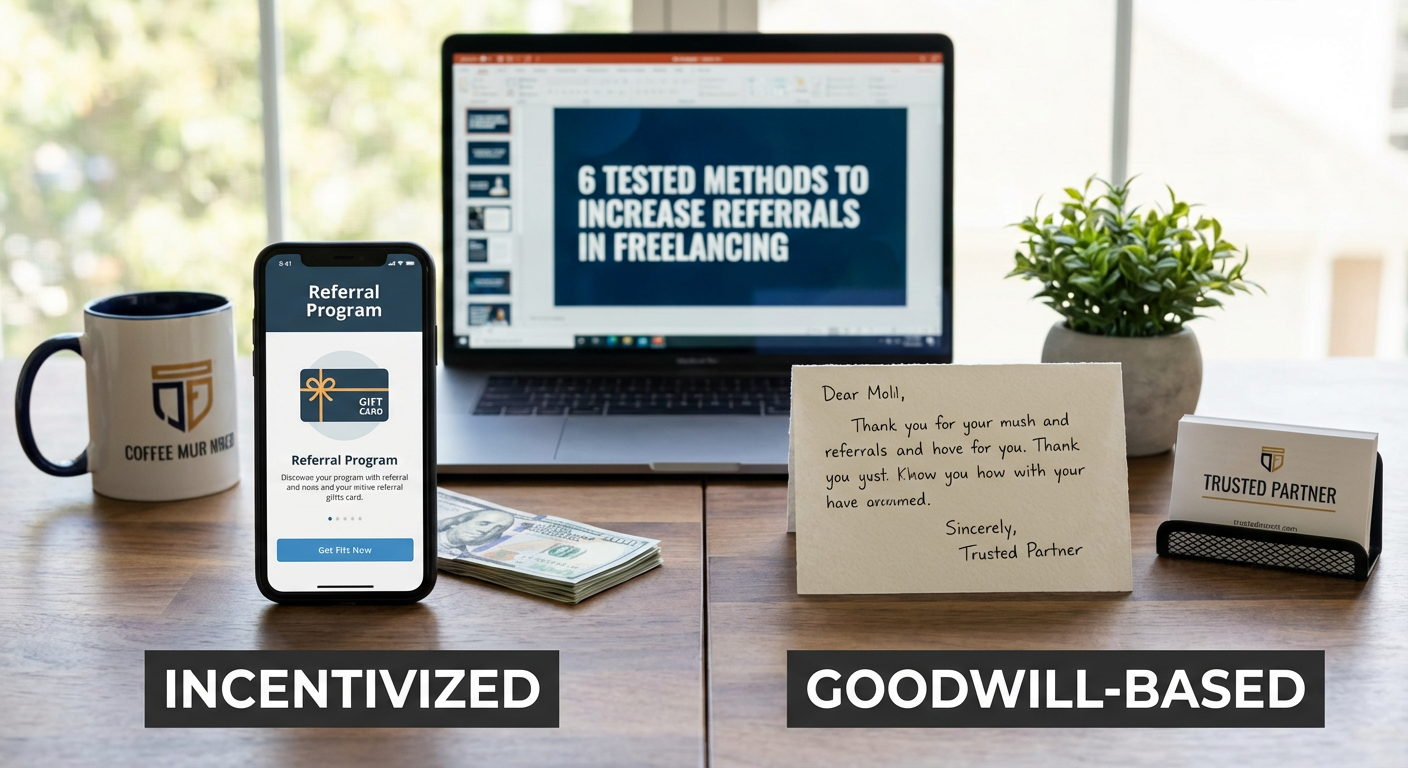
Offering a referral bonus, like a discount or cash reward, can motivate clients to spread the word about your services. This method works well when you want fast results and can afford the upfront cost. The trade-off is that incentivized referrals can sometimes feel transactional, and clients may refer you just for the reward rather than genuine belief in your work.
Goodwill-based referrals, on the other hand, happen when clients are so happy with your service that they tell others without expecting anything in return. These referrals tend to be higher quality because they come from authentic enthusiasm. The downside is that they’re harder to predict and control. You can’t force goodwill, and it takes longer to build.
If you’re just starting out or need a quick boost, incentivized referrals can help you gain traction. But if you’re playing the long game and want sustainable growth, focus on delivering work so good that clients can’t help but talk about you. Many successful freelancers use a mix of both, offering small thank-you gifts for referrals while prioritizing excellent service.
- Referral Programs with Automation vs. Manual Follow-Up
Automated referral programs use software to track referrals, send reminders, and distribute rewards. Tools like ReferralCandy or Viral Loops can handle the heavy lifting, making it easy for clients to share your link and for you to measure results. The upside is efficiency and scalability. The downside is cost and complexity, especially if you’re a solo freelancer without a big budget.
Manual follow-up means you personally ask satisfied clients to refer you, often through email or casual conversation. This approach is free and feels more personal, but it’s time-consuming and easy to forget. You have to remember to ask, and you have to track who referred whom on your own.
For freelancers with a steady client base and some budget to spare, automation can save hours and create a smooth experience for referrers. But if you’re lean and scrappy, a simple email template and a spreadsheet can do the job just fine. The key is consistency, whether you automate it or do it yourself.
- LinkedIn Referrals vs. Facebook Referrals
LinkedIn and Facebook both offer opportunities for referrals, but they work in different ways. LinkedIn is professional and business-focused, making it ideal for B2B freelancers like consultants, designers, and developers. When a client recommends you on LinkedIn or writes a recommendation, it carries weight with other professionals. The trade-off is that LinkedIn referrals can take longer to materialize because the platform is less casual and more formal.
Facebook is more personal and social, which makes it great for freelancers who work with individuals or small businesses. A glowing post in a local business group or a tag in a story can lead to quick inquiries. The downside is that Facebook referrals may be less qualified, and the platform’s algorithm can bury your content if you’re not active.
If your clients are corporate or professional, focus on LinkedIn. If you serve consumers or local businesses, Facebook may bring faster results. Some freelancers maintain both, tailoring their content to each platform’s audience and culture.
- Email Campaigns vs. In-Person Requests
Sending a referral request via email is convenient and scalable. You can reach multiple clients at once, include a clear call to action, and even attach a referral link or template they can forward. The upside is speed and reach. The downside is that emails are easy to ignore, especially if your message feels generic or pushy.
Asking for referrals in person, whether on a video call or at a coffee meeting, is more personal and harder to brush off. Clients are more likely to say yes when you ask face-to-face because the human connection is stronger. The trade-off is time. You can’t scale in-person requests the way you can with email.
For high-value clients or long-term relationships, an in-person ask is worth the effort. For broader outreach or clients you don’t talk to regularly, a well-crafted email can do the trick. Many freelancers use email as the default and save personal requests for their best clients.
- Partner Referrals vs. Client Referrals
Client referrals come from people who have hired you and liked your work. Partner referrals come from other freelancers or businesses who recommend you to their clients, even though they haven’t hired you themselves. Both are valuable, but they work differently.
Client referrals are easier to earn if you do great work and ask at the right time. They’re also more credible because the referrer has firsthand experience with you. The downside is that clients may not know many people who need your services, so the volume can be limited.
Partner referrals can bring in more leads because other freelancers and agencies often have larger networks and ongoing client relationships. The trade-off is that you have to build those partnerships first, which takes time and trust. You also need to offer something in return, like referring clients to them.
If you want steady, high-quality referrals, invest in both. Treat your clients so well that they become advocates, and build relationships with complementary freelancers who can send opportunities your way.
- Paid Ads for Referral Awareness vs. Organic Word-of-Mouth
Running paid ads on Google, Facebook, or Instagram can amplify your referral message by reaching people outside your immediate network. You can target specific demographics and track results with precision. The upside is speed and control. The downside is cost, and there’s no guarantee that paid visibility will convert into actual referrals.
Organic word-of-mouth happens naturally when people talk about your services without any advertising budget. It’s free and highly trusted, but it’s slow to build and hard to measure. You can’t force people to talk about you, and you can’t predict when it will happen.
For freelancers with a marketing budget and a clear referral offer, paid ads can accelerate growth. But if you’re bootstrapping, focus on delivering work that people want to talk about and make it easy for them to share. Word-of-mouth may take longer, but it’s more sustainable and doesn’t depend on your ad spend.
- Referral Bonuses for Clients vs. Discounts for New Customers
Giving a referral bonus to the person who refers you rewards loyalty and motivates them to spread the word. This approach works well when you want to incentivize your existing clients. The trade-off is that you’re spending money on people who have already hired you, rather than attracting new customers directly.
Offering a discount to new customers who come through a referral lowers the barrier to entry and makes it easier for them to say yes. This can increase conversion rates, but it also cuts into your profit margin and may attract price-sensitive clients who won’t stick around.
Some freelancers split the difference by offering a small bonus to the referrer and a small discount to the new client. This way, both parties feel rewarded, and you’re more likely to close the deal. The key is to test what works for your audience and adjust based on results.
- Asking for Referrals Immediately vs. Waiting Until Project Completion
Asking for a referral as soon as a client expresses satisfaction can capture their enthusiasm in real time. If they just thanked you or praised your work, that’s a natural moment to make the request. The upside is that the positive emotion is fresh. The downside is that the project may not be finished, so they don’t have the full picture yet.
Waiting until the project is complete and delivered gives the client a chance to see the full impact of your work. They can speak to the results, not just the process. The trade-off is that their excitement may have cooled off, and they might be focused on other things by the time you ask.
A balanced approach is to ask for a referral when the client is happy, but make it easy for them to follow through later. For example, you could say, “I’m so glad this is working out. If you know anyone who could use similar help, I’d love an introduction.” Then, follow up after the project wraps with a simple reminder.
- Formal Referral Contracts vs. Informal Agreements
A formal referral contract spells out the terms clearly, including who gets paid, how much, and when. This is common in high-ticket freelancing or partnerships with agencies. The upside is clarity and legal protection. The downside is that it can feel overly formal and may slow down the process, especially if the other party isn’t used to contracts.
Informal agreements rely on trust and a handshake, or a simple email confirming the arrangement. This approach is faster and more flexible, but it leaves room for misunderstandings. If someone refers a client and expects a payout, but you didn’t agree on the amount, things can get awkward.
For ongoing partnerships or high-value referrals, a simple one-page agreement can save headaches down the road. For casual referrals from friends or past clients, an informal thank-you gift or commission may be enough. The right choice depends on the relationship and the stakes involved.
Choosing the right referral strategy isn’t about picking one method and ignoring the rest. It’s about understanding the trade-offs and combining approaches that fit your business model, your budget, and your personality. Platform-based methods like Legiit offer structure and visibility, while organic tactics like word-of-mouth build trust over time. Incentives can speed things up, but great work is what keeps referrals coming. Test a few strategies, track what works, and refine your approach as you grow. Referrals are one of the best ways to build a freelancing business that lasts, and with the right mix of methods, you can create a steady stream of new clients who already trust you before you even meet.
