12 Platforms to Help Solopreneurs Get More Done Without Burning Out
Running a business alone means wearing every hat, juggling every task, and somehow finding time to actually deliver your core work. The right tools can mean the difference between feeling overwhelmed and feeling in control. This list focuses on platforms that help solopreneurs work smarter, not harder, by automating routine tasks, streamlining workflows, and creating space for what really matters. Whether you need help with client work, communication, or keeping your sanity intact, these platforms are built with the solo business owner in mind.
- Legiit

Solopreneurs often need specialized skills they don’t have time to learn or execute themselves. Legiit connects you with freelancers who can handle everything from content writing and graphic design to technical SEO and social media management. The platform focuses on digital marketing services, making it particularly useful if you need help with visibility, content creation, or technical tasks that would otherwise eat up your productive hours.
What sets Legiit apart is its focus on services rather than hourly rates, so you know exactly what you’re getting and what it costs upfront. This clarity helps you budget better and avoid scope creep. For solopreneurs who need reliable support without the overhead of hiring employees, it offers a practical middle ground that keeps projects moving forward.
- Calendly
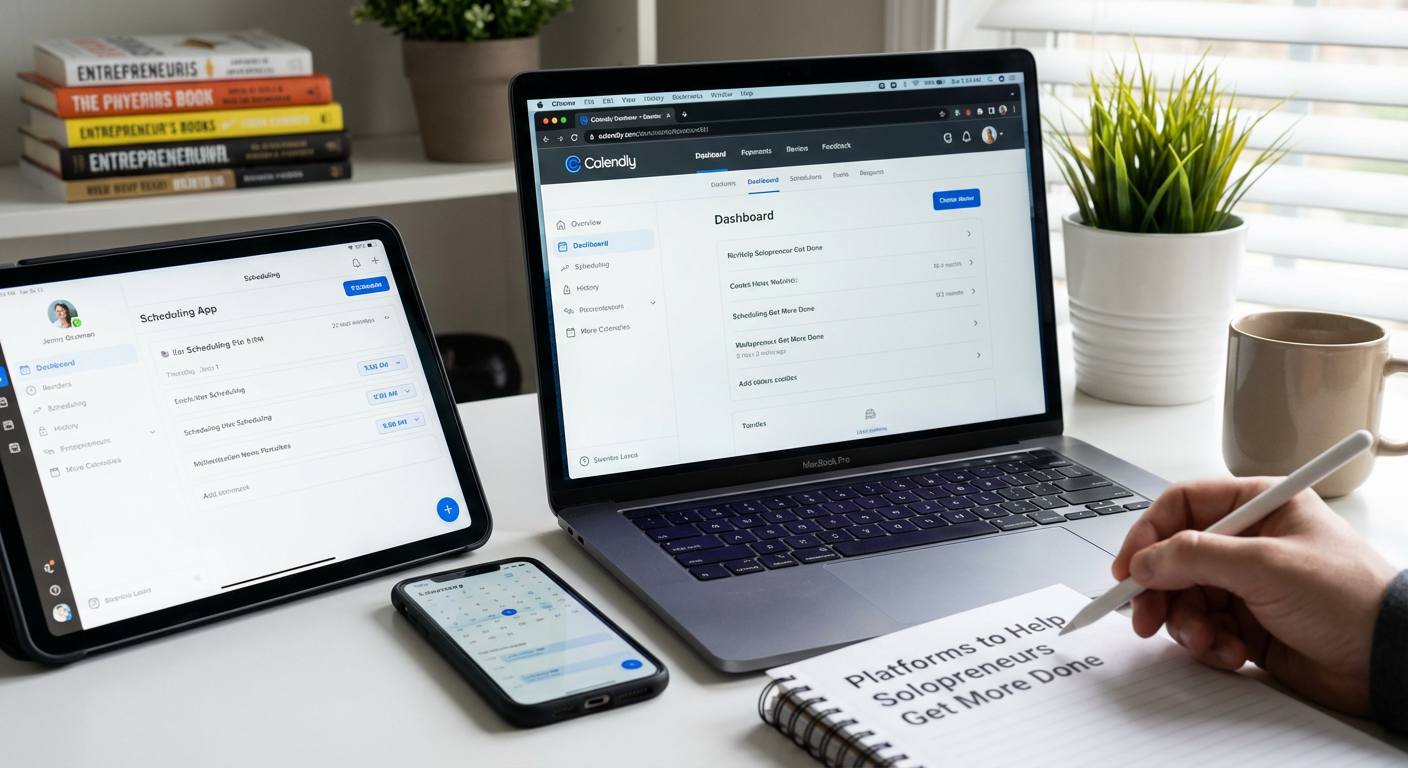
The back-and-forth of scheduling meetings can consume hours each week. Calendly eliminates this friction by letting clients and collaborators book time with you based on your actual availability. You set your preferences, share a link, and let others choose a slot that works for both of you.
The platform integrates with your existing calendar systems, automatically adjusts for time zones, and sends reminders to reduce no-shows. For solopreneurs who rely on consultations, discovery calls, or client meetings, this simple tool reclaims time that’s better spent on actual work. It also makes you look more professional and organized, which matters when you’re building trust with new clients.
- Notion
Keeping track of projects, notes, tasks, and documentation in separate tools creates friction and wasted time. Notion combines all of these into one flexible workspace where you can build systems that match how you actually think and work. You can create databases for client projects, write and organize notes, track tasks, and store reference materials all in one place.
The learning curve exists, but the payoff is substantial once you set up your workspace. Many solopreneurs use Notion as their central operating system, reducing the number of apps they need to check daily. Templates are available if you want a starting point, or you can build something custom that fits your specific business needs. The mobile app keeps everything accessible when you’re away from your desk.
- Loom
Explaining things through email often takes longer and creates more confusion than it solves. Loom lets you record quick video messages with your screen, camera, or both, making communication clearer and faster. Instead of typing out detailed instructions or feedback, you can show exactly what you mean in a fraction of the time.
Clients appreciate the personal touch of seeing and hearing you, and the videos are easier to follow than walls of text. You can use Loom for onboarding new clients, providing feedback on deliverables, creating tutorials, or answering questions. The platform generates a shareable link instantly, and viewers can watch at their convenience without needing special software. For solopreneurs who spend too much time explaining things, this tool is a genuine time saver.
- Zapier
Moving information between different apps manually is tedious and error-prone. Zapier automates these transfers by connecting your tools and creating workflows that run in the background. When something happens in one app, Zapier can trigger an action in another without you lifting a finger.
For example, you can automatically add new email subscribers to your CRM, save email attachments to cloud storage, or create task reminders from form submissions. The platform supports thousands of apps, and you don’t need coding skills to set up automations. Solopreneurs who implement even a few key automations often find they save hours each week on repetitive data entry and administrative tasks.
- Wave
Financial management trips up many solopreneurs who would rather focus on their craft than on bookkeeping. Wave provides free accounting software that handles invoicing, expense tracking, and receipt scanning without the complexity of enterprise solutions. You can create professional invoices, accept payments, and keep tabs on your financial health from one dashboard.
The platform is particularly valuable for solopreneurs who are just starting out or who have straightforward financial needs. While it may not replace a dedicated accountant, it keeps your records organized and makes tax time far less stressful. The mobile app lets you snap photos of receipts on the go, ensuring you capture expenses when they happen rather than trying to reconstruct everything later.
- Canva
Creating visual content can feel like a specialized skill that requires expensive software and years of training. Canva makes design accessible by providing templates, drag-and-drop editing, and a library of graphics that help you create professional-looking materials quickly. Whether you need social media graphics, presentations, flyers, or simple logos, the platform handles most visual needs without a steep learning curve.
The free version offers substantial functionality, while the paid tier adds features like brand kits and background removal. For solopreneurs who need to maintain a visual presence but lack design skills or budget for a designer, Canva bridges the gap effectively. You can create consistent, polished content that represents your business well without spending hours learning complex software.
- Airtable
Sometimes you need more power than a simple spreadsheet but less complexity than a full database. Airtable occupies this middle ground, offering a flexible platform that combines the familiarity of spreadsheets with features like linked records, attachments, and multiple views. You can use it to track clients, manage inventory, plan content, or organize projects.
The real value comes from being able to view the same information in different ways. A content calendar might appear as a calendar view, a kanban board, or a traditional grid depending on what you need at the moment. Solopreneurs appreciate this flexibility because one tool can adapt to multiple business needs rather than requiring separate solutions for each function. Templates help you get started quickly, and the interface is intuitive enough that you won’t spend days learning it.
- Grammarly
Written communication represents your business every day, and errors undermine credibility. Grammarly checks your writing in real time across browsers, email clients, and documents, catching mistakes you might miss when you’re writing quickly. Beyond basic spelling and grammar, it suggests improvements for clarity, tone, and conciseness.
For solopreneurs who write their own marketing copy, emails, proposals, and content, this tool acts as a second pair of eyes. The free version handles most needs, while the premium version adds advanced suggestions and style guidance. Installing Grammarly means you can write with confidence, knowing that obvious errors won’t slip through and damage your professional image. It’s particularly helpful when you’re tired or rushing to meet a deadline.
- Streak
Many solopreneurs live in their email inbox, making it the logical place to manage customer relationships. Streak turns Gmail into a simple CRM without requiring you to learn a separate platform or constantly switch between tools. You can track deals, manage pipelines, and keep notes about clients right inside your email.
The platform lets you see email history, set reminders, and organize contacts into custom pipelines that match your sales or project process. Mail merge functionality helps you send personalized messages at scale when needed. For solopreneurs who find traditional CRMs too complicated or who simply want to work from their inbox, Streak offers relationship management that fits naturally into existing workflows. The free tier provides enough functionality for many solo businesses.
- Pocket
Staying informed matters for business growth, but reading articles and resources takes time you may not have during work hours. Pocket lets you save articles, videos, and web pages for later, creating a personal library you can access when you actually have time to focus. The content is stripped of ads and formatted for easy reading across devices.
You can organize saved items with tags, making it easy to find that article you saved three months ago. The app works offline, so you can catch up on reading during commutes or downtime without needing internet access. For solopreneurs who want to keep learning and stay current in their field without constant distraction, Pocket creates a boundary between discovery and consumption. You can quickly save interesting content during the workday and actually read it during designated learning time.
- Toggl Track
Understanding where your time actually goes is the first step to using it better. Toggl Track provides simple time tracking that runs in the background while you work, helping you see which activities consume your hours and which clients or projects are actually profitable. The one-click timer makes tracking effortless, and detailed reports show patterns you might not notice otherwise.
Many solopreneurs discover they’re spending far too much time on low-value activities or undercharging for work that takes longer than expected. The data Toggl provides helps you make informed decisions about pricing, delegation, and time management. You can track time across devices, and the tool integrates with many project management and invoicing platforms. Understanding your time is essential for building a sustainable solo business, and this platform makes that understanding accessible.
The difference between a solopreneur who thrives and one who burns out often comes down to working systems, not willpower. These platforms handle the repetitive, time-consuming parts of running a business so you can focus on the work that actually requires your expertise. Start with one or two tools that address your biggest pain points rather than trying to implement everything at once. As each platform becomes part of your routine, you’ll find more time, less stress, and better results. The goal isn’t to use every tool available but to build a simple, reliable system that supports the business you want to run.
